


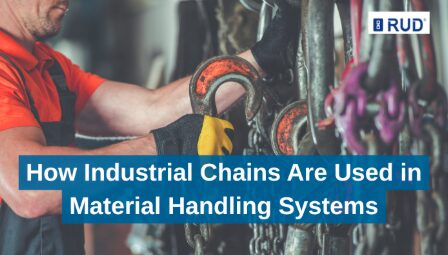
Industrial chains are used to move, lift, and transport heavy loads efficiently across automated production lines in material handling systems. That way, materials move smoothly through the system without delays or interruptions.
Operations such as coal processing facilities, bulk grain handling sites, and cement plants shift hundreds of thousands of tonnes of raw material every year. And RUD Australia has spent over 40 years supplying chain systems to operations like these.
In this article, we’ll cover:
- Main types of conveyor chains used in bulk material handling
- Matching chain spec to your load and environment
- The Australian industries that rely on them most
Let’s begin with understanding what industrial chains are.
What Are Industrial Chains and How Do They Work in Material Handling?
An industrial chain is made of connected steel links that help move power through a machine. It is built to handle heavy loads and constant stress without failing.
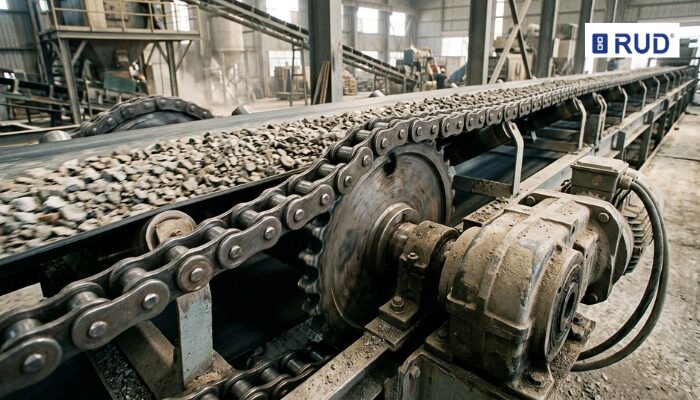
Each link connects to a sprocket, and the sprocket converts rotational energy from a motor into linear movement. That movement is what drives materials along a conveyor system.
These three things decide which chain suits a given application:
- Load Capacity: Every chain has a working load limit, and exceeding it speeds up wear on the links, sprockets, and gears. Industrial conveyor chains in bulk handling systems generally carry loads between 500kg and 50,000kg, depending on the application and equipment involved.
- Pitch Size: Pitch is the distance between each link’s centre points, and it directly affects how smoothly the chain meshes with the sprocket. A mismatched pitch, even by a few millimetres, puts uneven pressure on the drive system and shortens the chain’s working life.
- Link Material: The material the links are made from determines how well the chain holds up against heat, corrosion, and abrasion. For instance, stainless steel links suit chemical and food processing environments. Heat-treated alloy steel, on the other hand, is the standard choice for high-temperature industrial and construction applications.
The right combination of these three factors is what keeps a bulk handling system running at full capacity. And getting any one of them wrong puts stress on every connected device and component in the system.
Types of Conveyor Chains Used in Bulk Handling Systems
Conveyor chains fall into a few distinct types, including roller chains, drag chains, and apron chains. Each one is built to handle a specific set of operating conditions.
Take a look at them in detail.
How Roller Chains and Chain Drives Move Heavy Loads
Roller chains are one of the most widely used chain types in industrial conveying. They balance load capacity with smooth, low-friction movement by using rotating rollers on each link to reduce contact pressure against the sprocket teeth (that design is what makes them common across manufacturing plants and processing facilities).
In terms of delivery, a chain drive converts rotational energy from a motor along a set path. So for high-load, controlled-speed applications, such as ore processing or cement manufacturing, roller chains are typically the first choice.
Where Drag Chains Are Used in Bulk Material Handling
Drag chains work by scraping or pushing materials along an enclosed trough. That makes them well-suited to horizontal or slightly inclined conveying applications. They can handle materials like grain, ash, coal, and cement powder at operating temperatures below 200°C.
They are widely used in agricultural and mining applications because their enclosed design helps contain dust and spillage (which is important on sites where material loss builds up). In terms of lead time and cost, drag chains are generally the most affordable option of the three.
What Makes Apron Chains Different and When to Use Them
The design of apron chains makes them the right choice for heavy, sharp, or abrasive materials like rock, ore, and demolition waste. They carry materials on overlapping steel pans rather than pushing them along a trough. This way, the pan takes the impact instead of the chain itself.
Furthermore, apron chains handle operating temperatures above 300°C, which is why cement plants and steel facilities across Australia rely on them for high-temperature bulk handling.
Unlike drag chains, apron chains work well on steeper inclines. That means they suit applications where materials need to be elevated as part of the conveying path.
Industries Across Australia That Run on Industrial Chains
Industrial chains move hundreds of thousands of tonnes of raw material every single day in establishments like coal terminals at the Port of Brisbane, or grain storage facilities beyond regional Queensland.
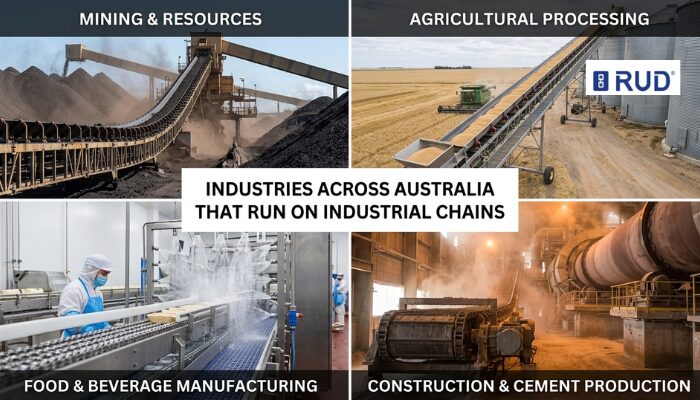
From what we’ve seen working across Queensland mining and processing sites, four industries put these chains under the most pressure.
- Mining and Resources: Drag and apron chains shift ore, coal, and raw aggregates through processing equipment throughout Queensland and WA. There, a single bulk handling system in a mid-sized coal terminal can move upwards of 2,000 tonnes per hour.
- Agricultural Processing: Peak harvest periods in the Darling Downs run continuously for 6 to 8 weeks. Chain-based conveyor systems are usually what keep grain receival sites moving at that pace without stopping.
- Food and Beverage Manufacturing: Hygiene standards in food processing plants demand chains built for moisture, heat, and wash-down conditions. These systems typically run at speeds between 0.1 and 0.5 metres per second to protect product integrity.
- Construction and Cement Production: Fixed cement plants rely on apron chains rated for continuous operation above 250°C. Unplanned shutdowns become a frequent problem for these site operators without the right chain spec.
Regardless of the industry, the common thread is the same: the wrong chain choice costs more than the right one ever would. In most of these applications, a chain failure can bring the entire operation to a complete stop.
That level of reliability is even more important in large-scale industries. For example, Australia exports over 30 million tonnes of grain every year, and chain-based conveyor systems are what keep receival terminals, port loading facilities, and on-farm storage running at that volume.
The Right Chain Makes the Difference
Industrial chains are the base of any bulk handling system, and spec selection directly affects uptime. A system that runs for years basically depends on the chain type, operating conditions, and getting the right expertise behind the decision.
If wear signs are already appearing on your current system, or a new bulk material handling setup is being planned, waiting would cost you significantly more than acting early.
RUD Australia carries a reliable range of industrial chains suited to conveying, bulk handling, and heavy material transport across a variety of Australian industries. Read through the full product range or contact the team directly at the website to get the right chain specified for your system.